


In Interludes and Transitions / "في الحِلّ والترحال", The 3rd Diriyah Contemporary Art Biennale, Riyadh, 30 January to 2 May 2026
Pio Abad is a multidisciplinary artist whose work spans drawing, installation, and archival intervention to examine the legacies of colonialism, political trauma, and personal memory. Deeply informed by political and social events in the Philippines, where he was born and raised, Abad’s practice draws from a family narrative entwined with the nation’s history. His parents were key figures in the anti-dictatorship movement during the 1970s and ’80s, shaping his enduring engagement with memory and resistance. Abad critically reworks symbols of power, transforming them into poetic acts of resistance and remembrance. His art reflects on diasporic experience, cultural displacement, and the weight of suppressed histories.
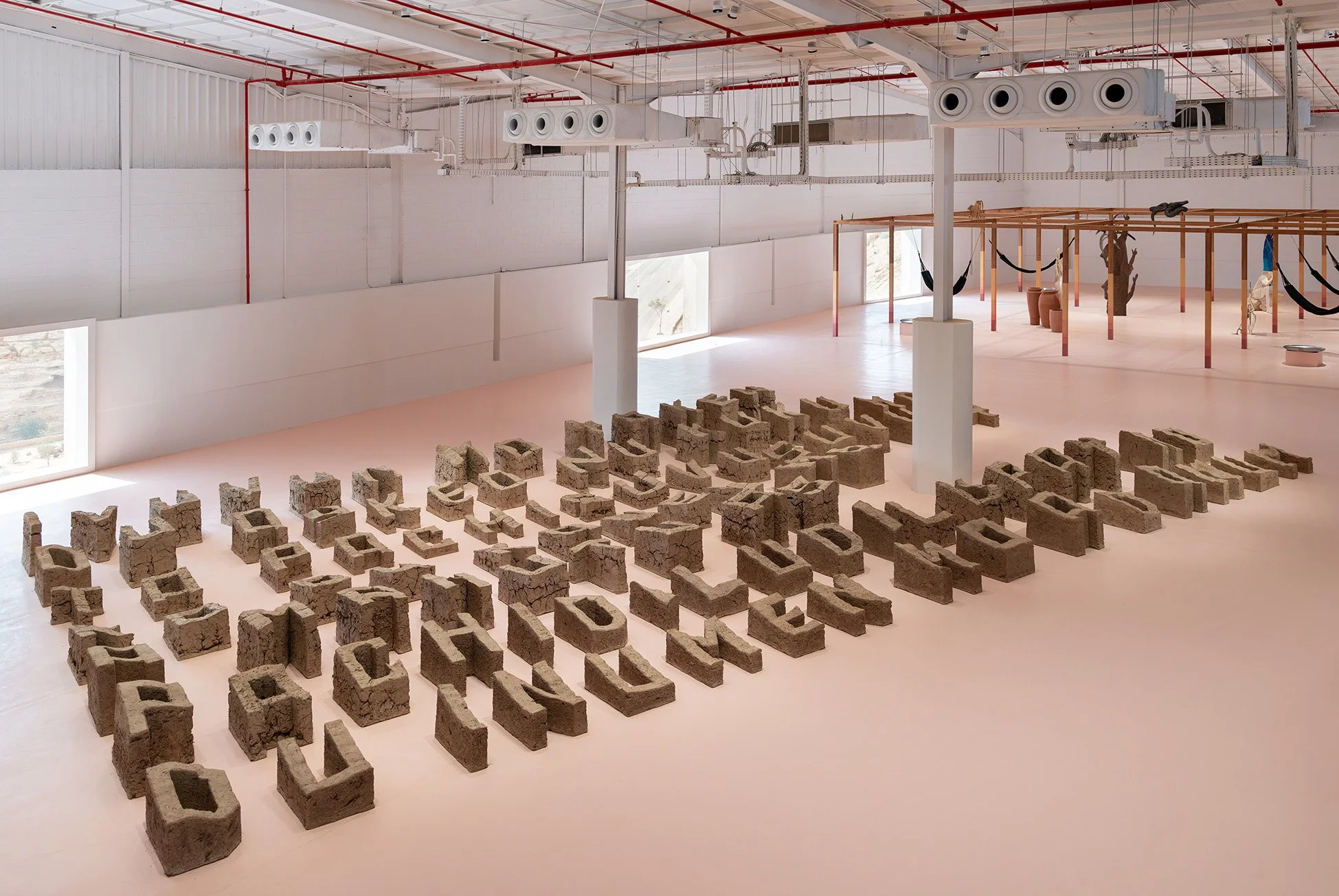
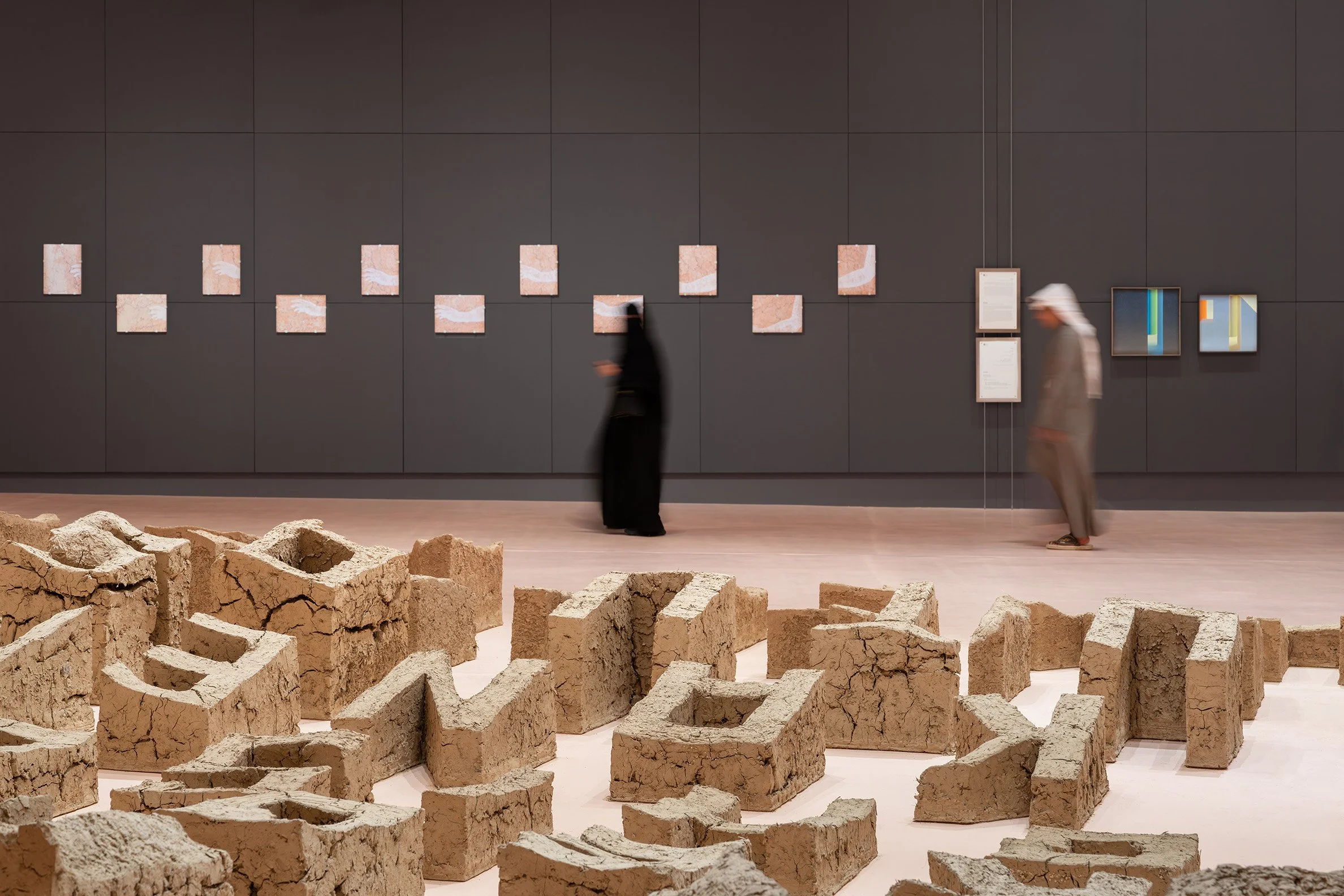
Laji No. 97 draws on Abad’s Ivatan heritage—an Indigenous community from the Batanes and Babuyan islands of the northern Philippines—through an installation of ninety-nine hand-formed mud brick[1] [2] sculptures that draw on vernacular mud building techniques. Each brick represents a single letter; together, they spell out a traditional Ivatan laji, an ancient oral poem, translated as: “Bury me under your fingernails / that I may be eaten along with every food you eat / that I may be drunk along with every cup of water you drink.” Arranged across the floor, the work transforms a spoken verse into physical form. As the Ivatan language faces extinction, Laji No. 97 becomes a site of embodied preservation—where memory and care persist through material and gesture.
In Giolo’s Lament, Abad revisits the story of Prince Giolo—an enslaved Filipino brought to Oxford in the 1680s—whose body became one of the earliest recorded instances of transoceanic human transport for entertainment and labor. Covered from neck to toe in tattoos that signified identity, status, and the cultural traditions of the people of Miangas, Giolo was exhibited in England as an exotic curiosity. Inspired by an etching found in the archives of St John’s College, Oxford, Abad re-renders Giolo’s tattooed hand across fourteen laser-engraved marble slabs. Arranged like a fragmented body, the work reflects on displacement, objectification, and historical erasure. Abad’s choice of marble, traditionally associated with monumentality and permanence, memorializes the subject, Giolo, whose colonized body was dehumanized and commodified. By reframing this history as lamentation, the work becomes a quiet act of honoring and remembrance.